
Shingle vs Tile Roofing: Which Is Better For Your Mesa Home?
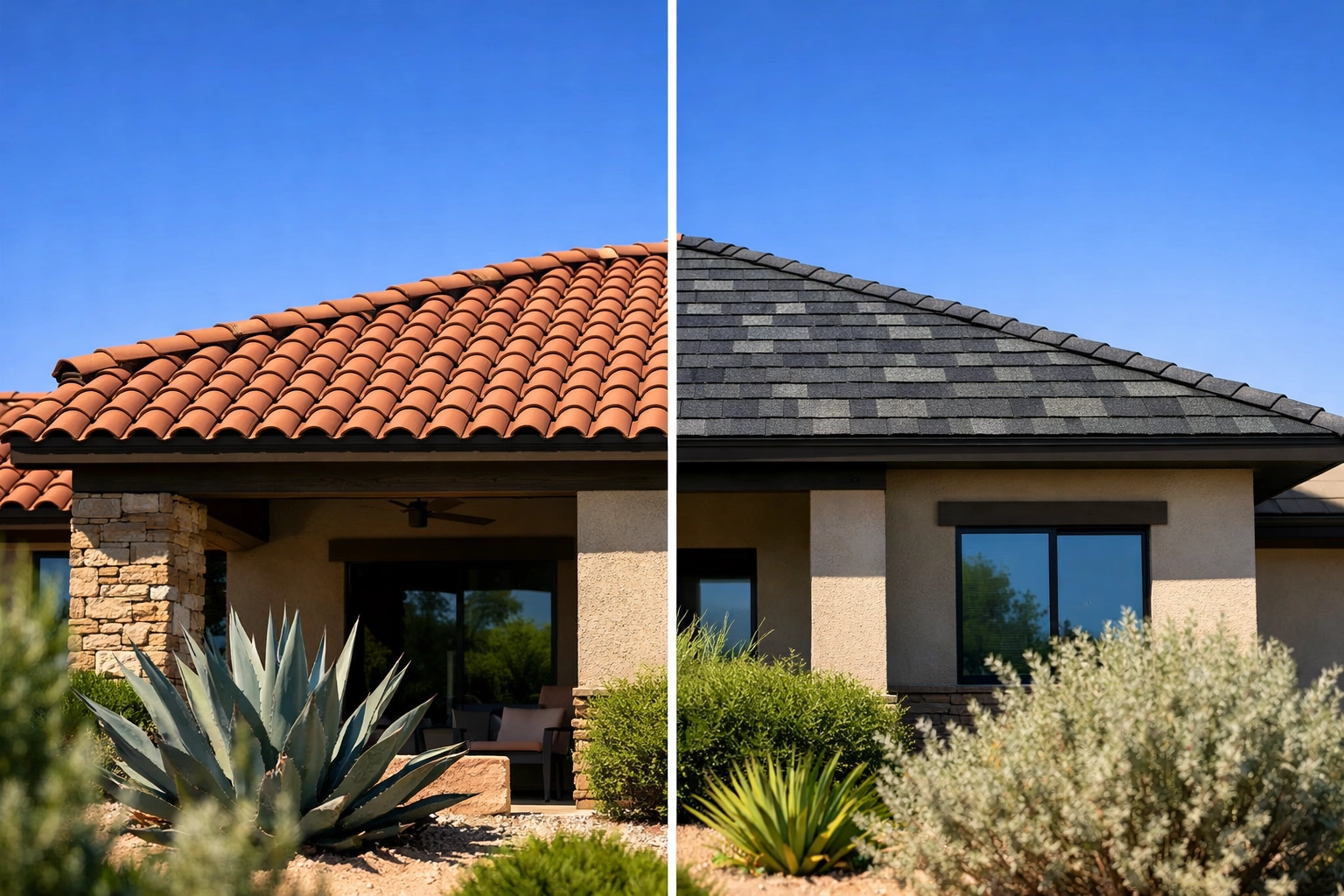
If you’ve spent more than five minutes driving through the neighborhoods of Mesa, Arizona, or even up through the mountain-side communities in Utah, you’ve noticed a very distinct architectural divide. On one hand, you have the classic, textured look of asphalt shingles. On the other, the heavy, Mediterranean-style clay or concrete tiles.
As a Mesa roofing company that has been working on these roofs for over 40 years, we get asked the same question almost every week: “Which one is actually better?”
The truth is, there isn’t a one-size-fits-all answer. A roof that works perfectly for a home in Salt Lake City might not be the best choice for a house bake-drying in the 115-degree heat of a Phoenix summer. Choosing between shingle vs tile roofing isn’t just about curb appeal; it’s about how your home handles the extreme weather patterns unique to our corner of the country.
The Battle Against the Sun: Mesa’s Heat Resistance
In Arizona, the sun is your roof’s primary enemy. It’s not just the heat; it’s the relentless UV radiation that breaks down materials at a molecular level.
Tile roofing: specifically concrete and clay: is the undisputed champion of heat resistance. Tiles are dense, meaning they have a high “thermal mass.” They take a long time to heat up and a long time to cool down. More importantly, the way tiles are installed creates a small air gap between the tile and the roof deck. This natural ventilation acts as a buffer, preventing heat from transferring directly into your attic. If you’re curious about the numbers, we’ve seen how how a new roof can improve your home energy efficiency firsthand, often resulting in significantly lower cooling bills during those brutal July afternoons.
Asphalt shingles, while much more advanced than they were 20 years ago, are essentially a petroleum-based product. They absorb heat. In the Mesa sun, shingles can become brittle over time, leading to granules shedding and the edges curling. While they are a great affordable residential roof repair option, they generally won’t match the cooling properties of tile in a desert environment.
Facing the Freeze: Durability in Utah and Northern Arizona
When we move our focus north to our neighbors in Utah, the conversation shifts from “heat reflection” to “snow load” and “freeze-thaw cycles.”
Utah winters can be tough on a roof. Snow sits for weeks, melts during the day, and refreezes at night.
- Shingles: These are excellent for shed-off. Because they are a continuous surface, they handle snow sliding off quite well. However, if the shingles are old and curling or buckling, ice dams can form easily, pushing water up under the layers.
- Tile: Tiles are incredibly durable, but they are heavy. A standard tile roof can weigh three to four times as much as a shingle roof. If you are considering switching from shingles to tile in a place like Ogden or Salt Lake City, we have to ensure your home’s structure can handle the weight of the tiles plus a heavy snow load.
That said, concrete tiles are nearly “set it and forget it” when it comes to durability against the elements, provided the underlayment is handled correctly.
The “40-Year Secret”: It’s What’s Underneath That Counts
Here is something most sales-heavy contractors won’t tell you: A tile roof is only as good as its underlayment.
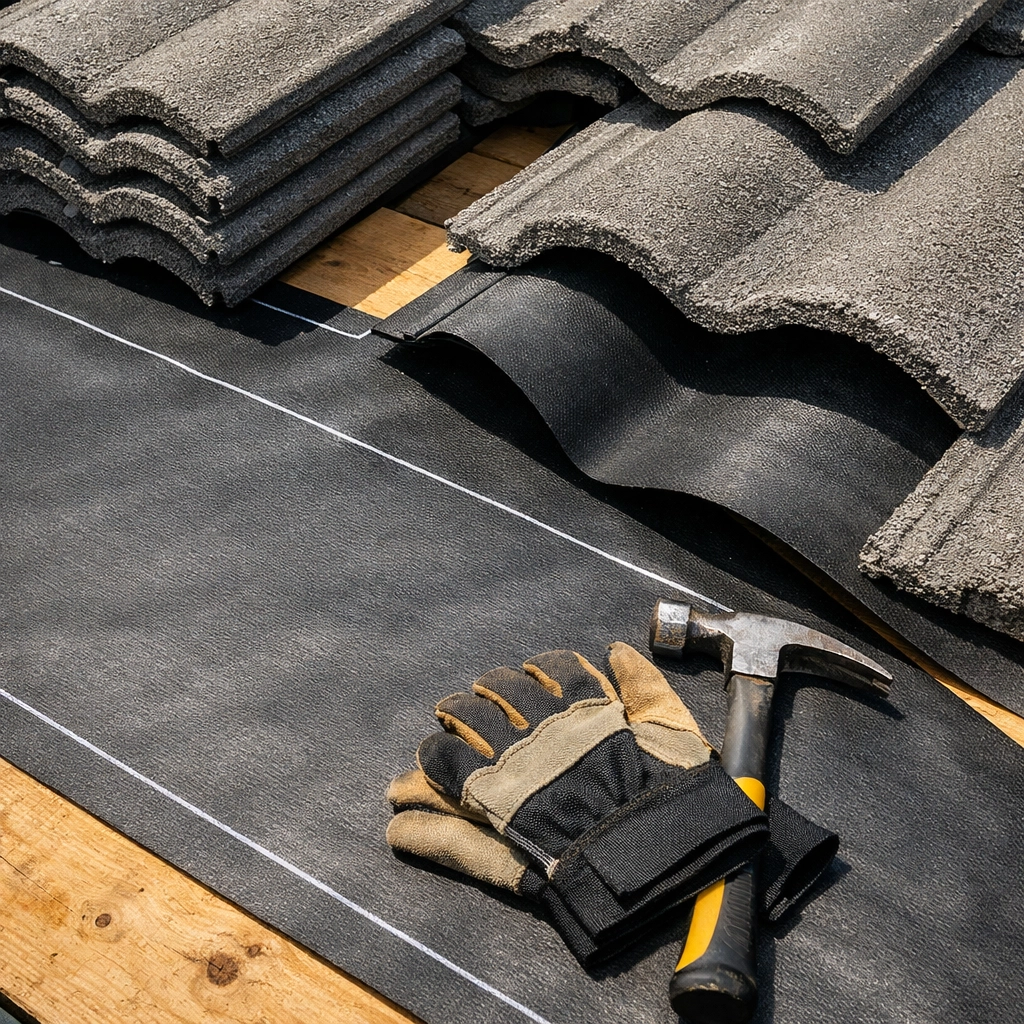
At The Roofing Company Inc., we’ve seen thousands of tile roofs where the tiles look perfect, but the house is leaking like a sieve. Why? Because while the tiles can last 50 to 75 years, the felt paper underneath usually only lasts 20. In the Phoenix area, tile roof repair Phoenix AZ often involves carefully removing the existing tiles, replacing the worn-out underlayment with high-grade synthetic materials, and then re-installing those same tiles.
If you choose shingles, the material itself is the primary waterproof barrier. If a shingle blows off during a monsoon, your roof is immediately vulnerable. With tile, you have a “dual-layer” system. The tile sheds the bulk of the water, and the underlayment catches the rest. Knowing what are the signs I need a roof replacement can save you thousands if you catch underlayment failure before it rots your plywood.
Cost Comparison: Short-Term vs. Long-Term Value
We like to be transparent with our neighbors about the investment. There is no getting around it: tile is more expensive upfront.
- Shingle Roofing: This is the most cost-effective way to get a high-quality, warrantied roof on your home. It’s faster to install (often just a day or two) and requires less specialized labor. It’s a great choice if you plan on moving in the next 10 years or if you’re working with a tighter budget.
- Tile Roofing: Think of this as a 50-year investment. While the initial check you write will be larger, you likely won’t have to replace the entire roof again in your lifetime. When you factor in the energy savings and the increased property value, the “cost per year” of a tile roof is actually often lower than shingles.
Aesthetics and Home Style
Your roof makes up about 40% of your home’s visible exterior. In many Mesa and Gilbert HOAs, tile is actually a requirement to maintain the Southwestern aesthetic.
- Tiles offer that classic “S-Tile” (Spanish) or “Flat Tile” (Modern) look. They come in earth tones that blend perfectly with the Arizona landscape.
- Shingles offer more versatility in color. You can get deep blues, greys, or even greens to make a Salt Lake City cottage stand out. Modern “Architectural” shingles have a thick, dimensional look that mimics wood shakes without the fire hazard.
Maintenance: What to Expect
No roof is truly “maintenance-free,” but they fail in different ways.
- Shingle Maintenance: You’ll want to check for “balding” (loss of granules) and wind damage after big storms. If you see shingles in your yard after a monsoon, it’s time to call us.
- Tile Maintenance: The biggest issue here is cracked tiles. Whether it’s from a heavy hailstorm or a stray golf ball, a cracked tile needs to be swapped out quickly. Even one damaged tile leaves your roof system vulnerable to leaks. We always recommend keeping a few spare tiles in your garage for quick fixes.
Whether you are in Arizona or Utah, don’t forget about your gutters. A perfect roof can still cause foundation issues if the water isn’t directed away. We always suggest looking at a proper gutter installation as a companion to any new roof project.
The Verdict: Which Should You Choose?
So, back to the big question. Shingle vs tile roofing: which is the winner?
Choose Tile if:
- You live in the Arizona heat and want lower energy bills.
- You plan on staying in your home for 15+ years.
- Your HOA requires a specific “Southwestern” look.
- You want the highest level of fire resistance available.
Choose Shingles if:
- You want a high-quality roof that fits a more modest budget.
- Your home’s structure isn’t reinforced for heavy tile weight.
- You prefer a wider range of colors and a more “traditional” American home style.
- You are located in a high-wind area where specialized high-wind shingles can be easily replaced if damaged.
Trust the Experience of 40+ Years
We’ve seen the roofing industry change a lot since we started. We’ve seen “miracle” products come and go, but shingles and tiles remain the gold standard for a reason. At The Roofing Company Inc., we treat every roof like it’s over our own heads. We’re not here to push the most expensive option; we’re here to help you find the right option for your family and your budget.
If you’re still on the fence, or if you’ve noticed a few leaks after the latest storm, don’t wait for the damage to get worse. We offer honest, clear estimates and we’ll tell you exactly what we see: no surprises, no pressure.
Whether you need a mesa roofing company to look at your sun-damaged tiles or you need a hand with balcony repair and replacement in Arizona or Utah, we’re here to help.
Ready to see which roof is right for your home? Contact us today for a professional inspection and let’s get your home protected for the decades to come.